UX / UI Design
Course Page Redesign
Summary
Warwick's undergraduate course pages attract 643,499 users and 2.1 million views annually, sitting at the centre of a recruitment pipeline tied to £438M in course fee income. Despite their commercial significance, the pages had not been meaningfully redesigned since 2020. This project delivered a complete template rebuild, grounded in data from 1,587 prospective students, with the goal of removing friction from the application journey and supporting the university's 2026/27 income targets.
£438M in course fee income — and course pages hadn't been meaningfully redesigned since 2020.
Opportunity
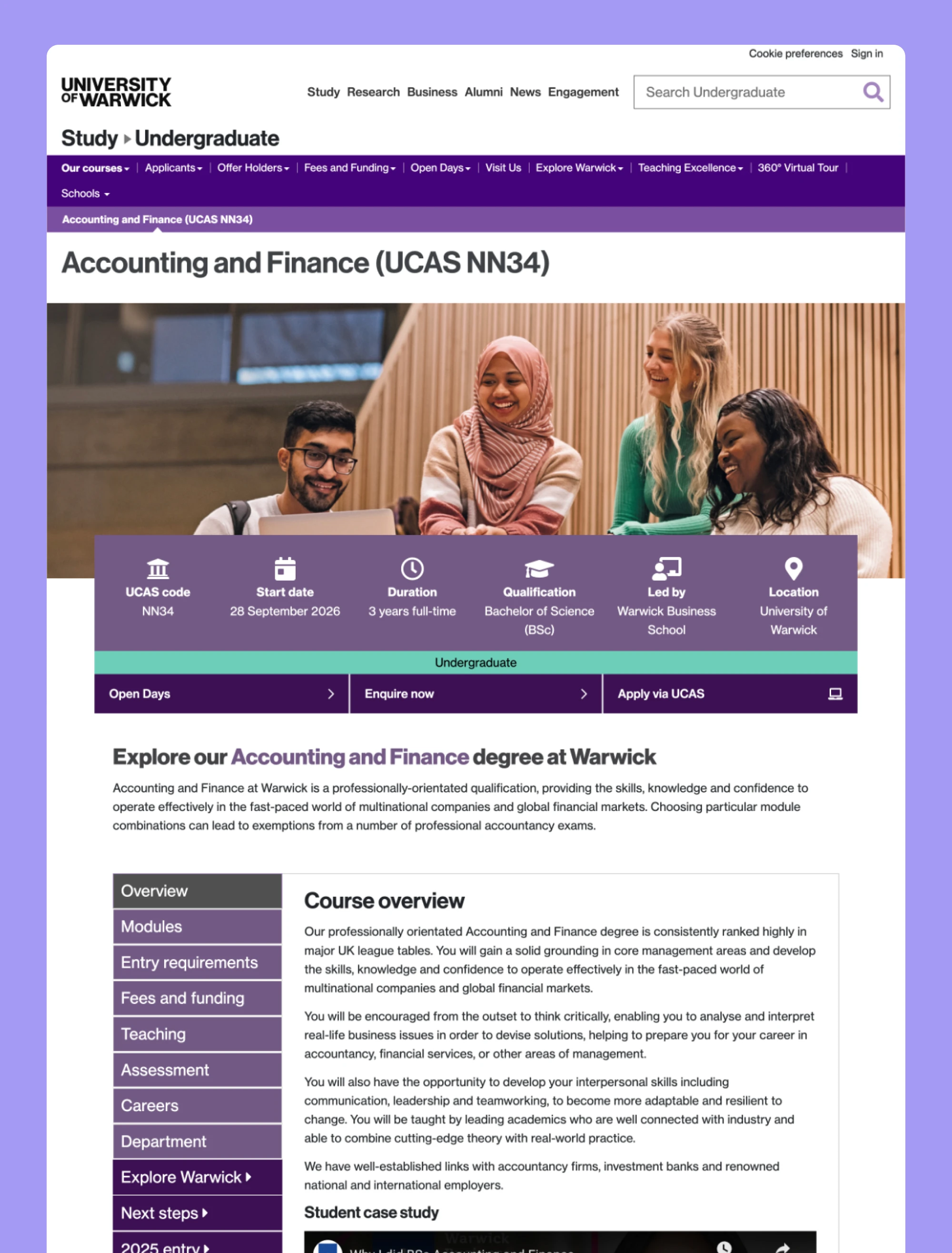
The existing pages were actively undermining recruitment. Erratic sticky buttons, a disconnected course title and overview, and redundant calls to action created a disjointed first impression. Information hierarchy buried persuasive content beneath page update notices, and average line lengths of 111 characters sat well above the accessible 50–75 character optimum. Heatmap data from 33,218 page views confirmed it: cold zones around the header image and key interaction areas showed users were ignoring significant portions of the page. Backend editing was also slow and difficult, limiting the team's ability to iterate on content.
Research
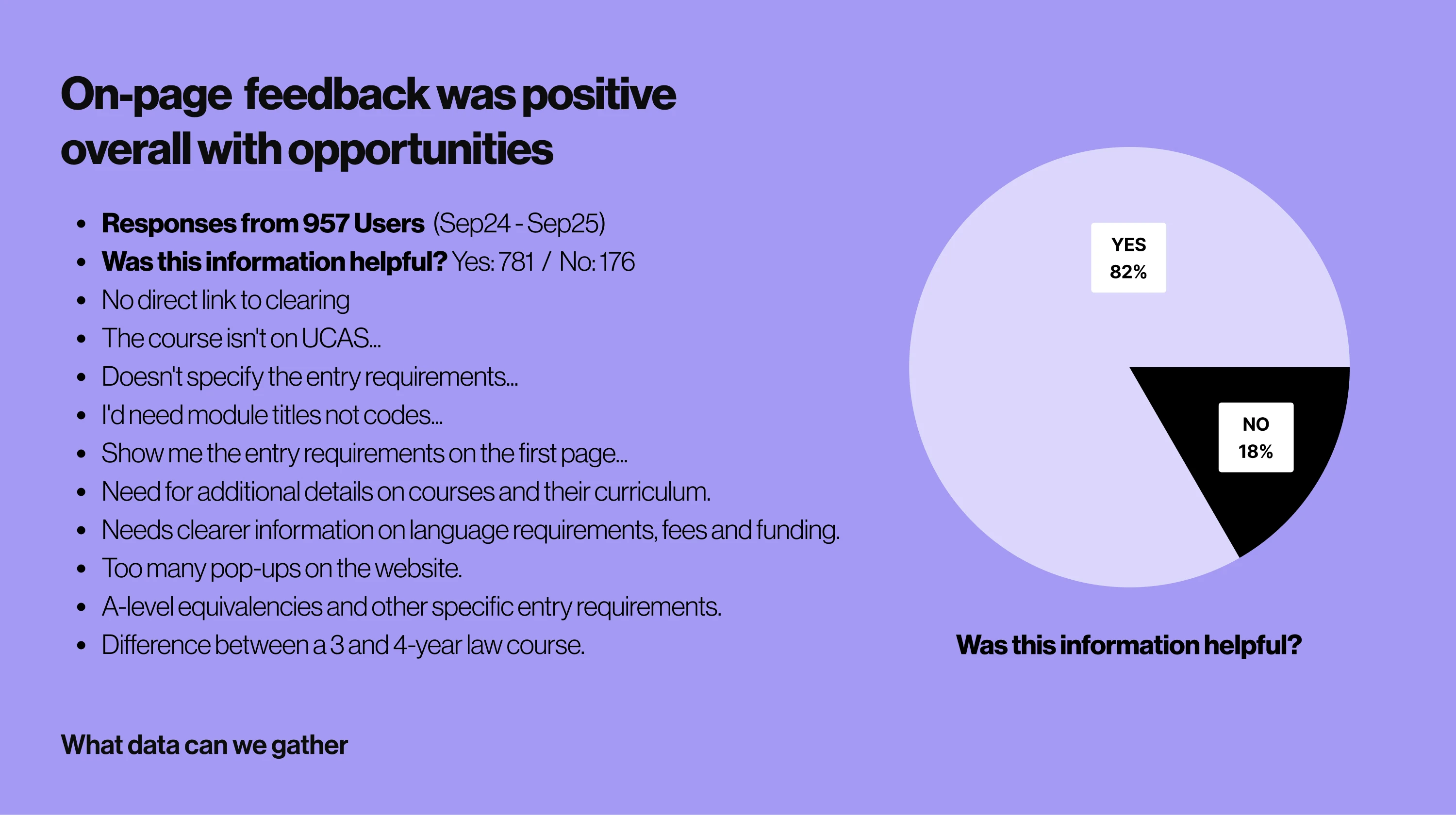
The redesign is grounded in data from 1,587 users across four research streams, supplemented by analytics from live pages and learnings from the postgraduate redesign. On-page feedback from 957 prospective students revealed that while 82% found content helpful, the 18% who didn't cited missing module titles, unclear entry requirements, and absent application deadlines. Mouseflow surveys returned an average content usefulness rating of 8/10, yet 24% of users still couldn't find what they needed, pointing to a findability problem rather than a content quality issue.
24% of users couldn't find what they needed — a findability problem, not a content quality issue.
Navigation testing with 250 Open Day visitors validated the proposed jump-to-section design, and competitor analysis of UOB and Imperial identified skip-link navigation and clear CTA hierarchy as best practices worth adopting.
Design Process
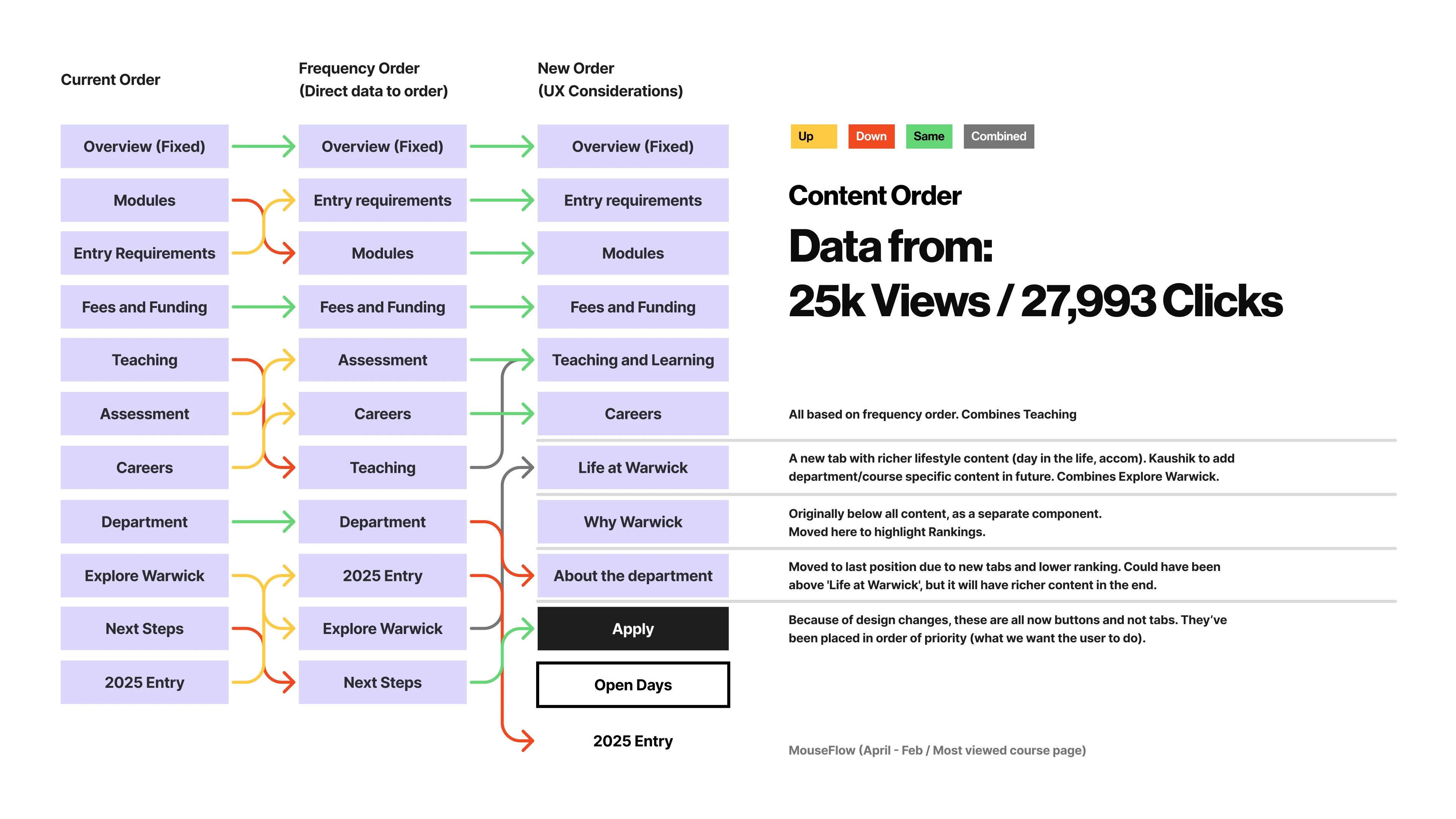
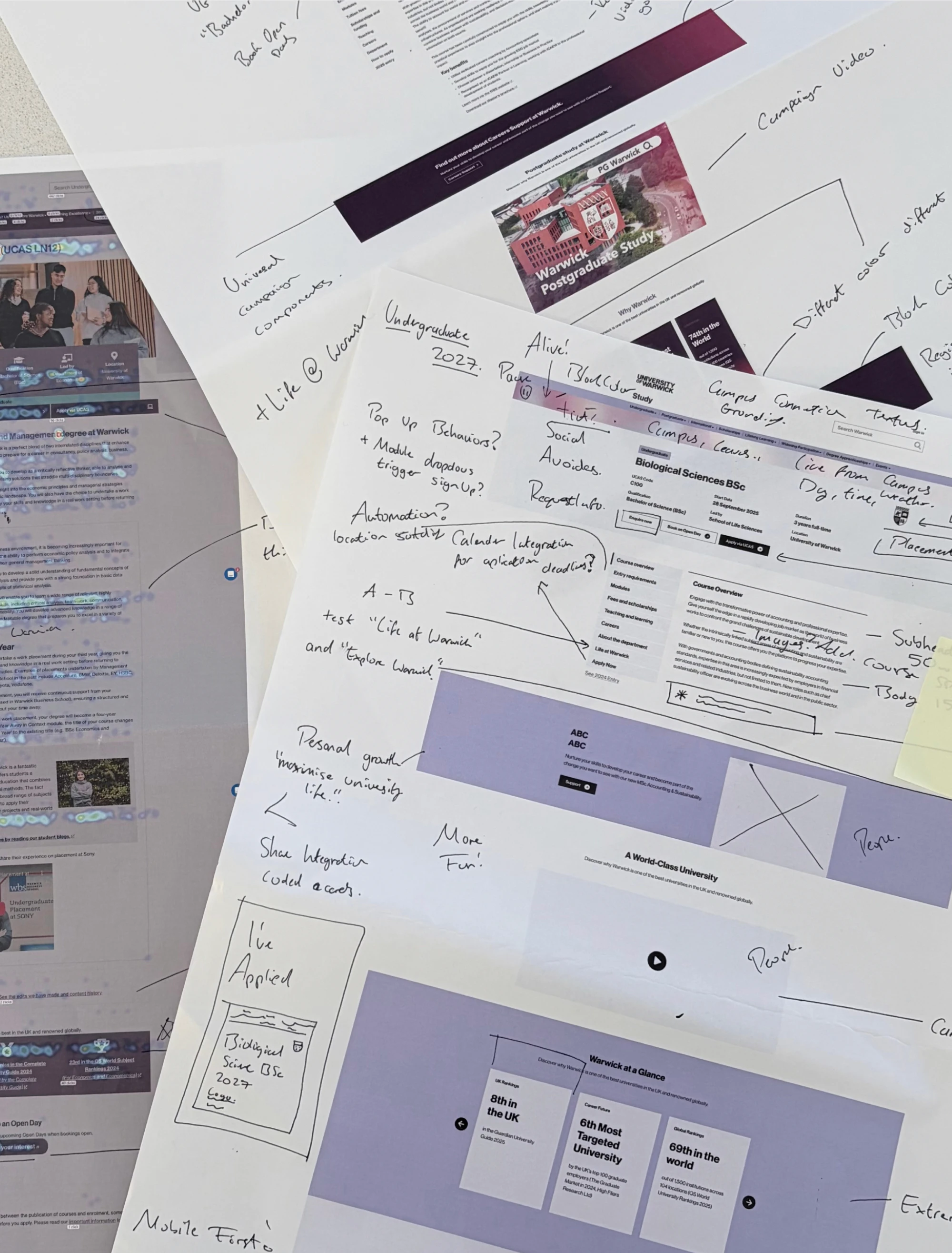
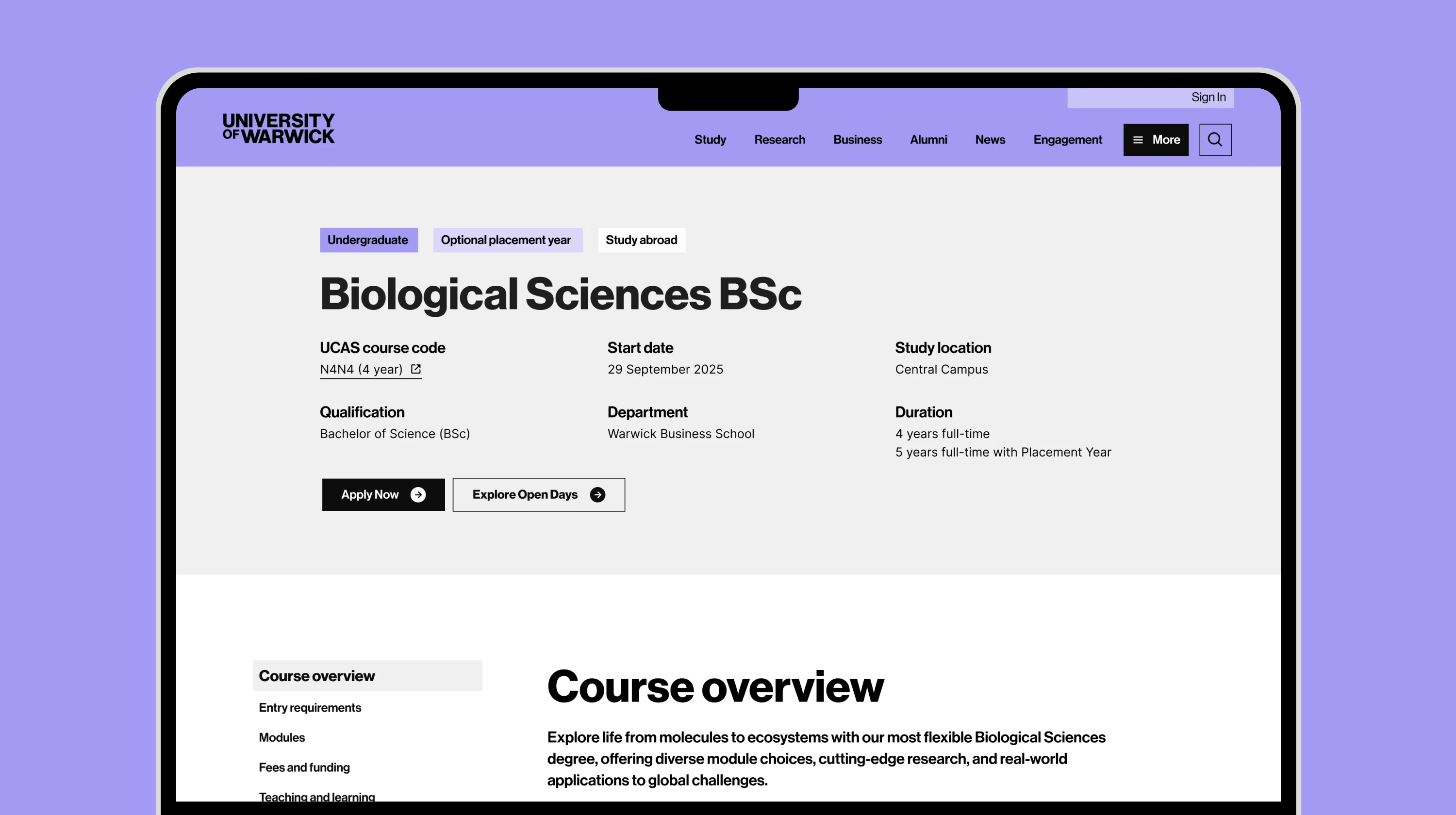
Research findings directly shaped a revised content order, validated against 25,000 views and 28,000 clicks of Mouseflow frequency data. Entry requirements, modules, and fees were front-loaded in the sequence to reflect actual user priority, replacing the previous editorial-led structure. Paper prototyping sessions generated rapid concepts before committing to high-fidelity Figma work, with AI heatmap prediction (Attention Insight) to validate visual hierarchy ahead of development. Established UX principles guided the design throughout: Miller's Law informed metadata chunking above the fold, Hick's Law justified accordions in entry requirements to reduce cognitive load, and the Von Restorff Effect was applied to isolate the Apply Now CTA from secondary actions.
Outcomes
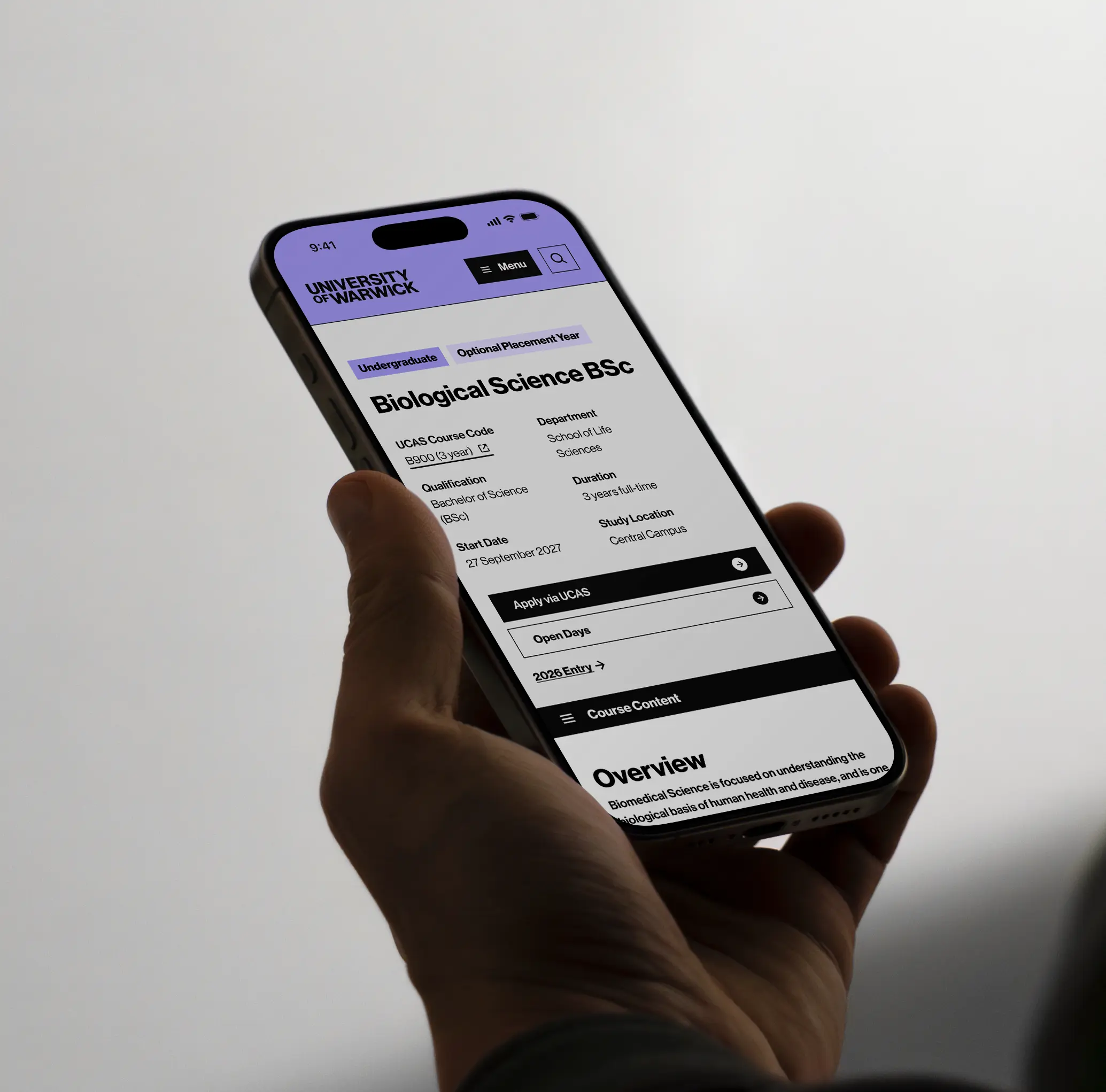
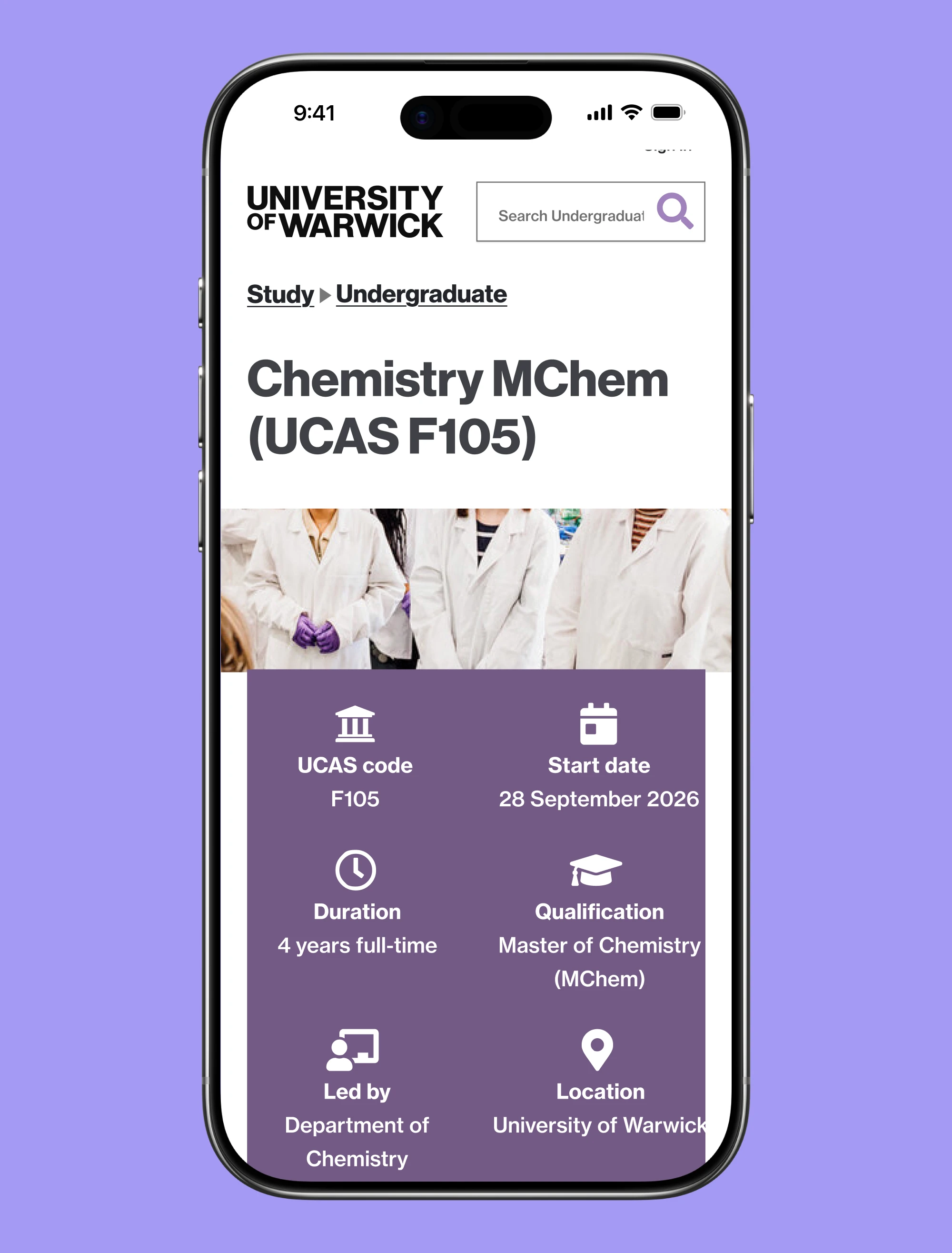
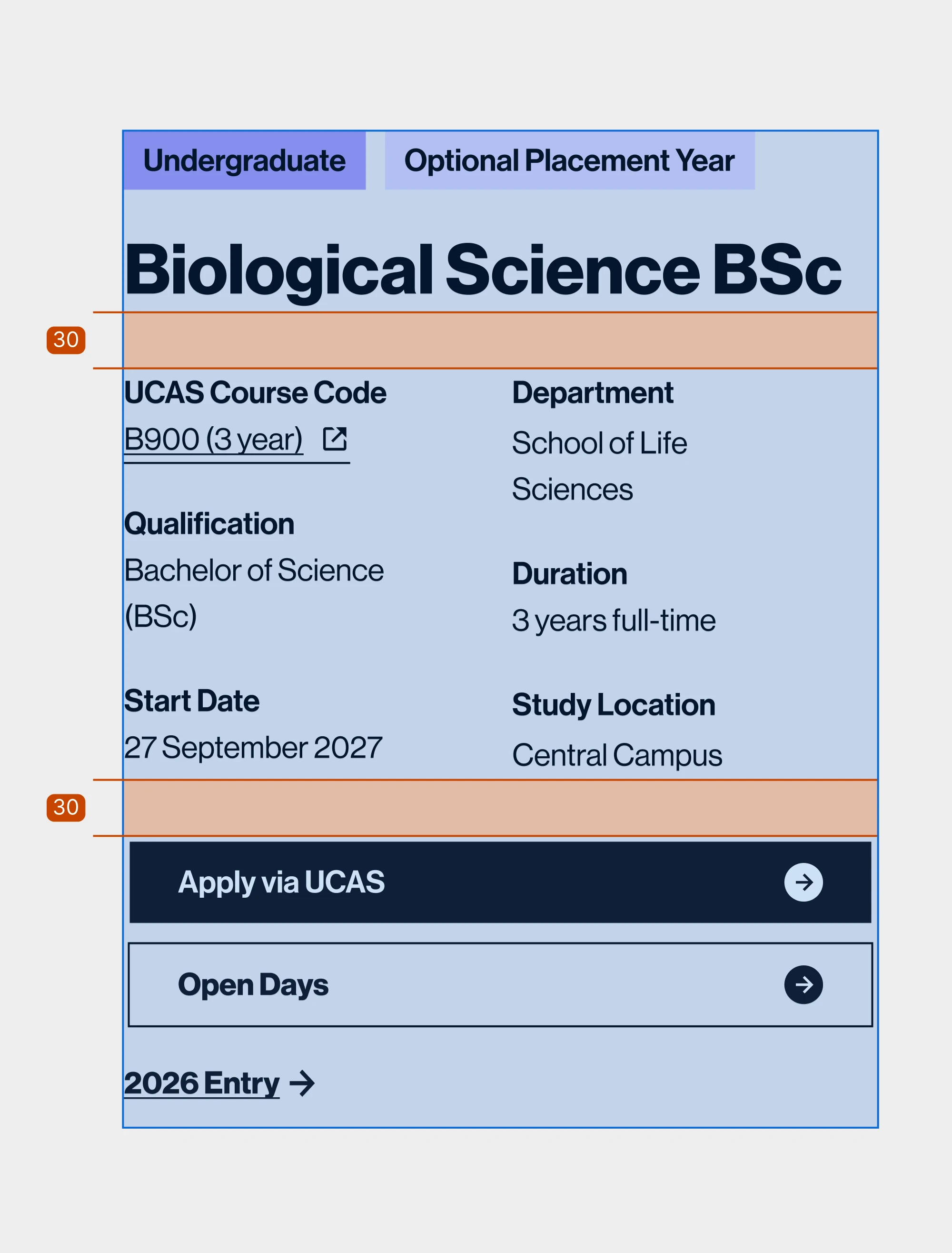
The redesign delivers the most significant improvement to the undergraduate course page experience in the programme's history. Critical course metadata is now visible above the fold, removing the need to scroll for basic facts. A sticky left-hand navigation allows users to jump to any section at any point, consistent with competitor patterns validated in research. Content column width has been constrained to the accessible 50–75 character range, the UCAS link now deep-links directly to individual course listings, and the full design is mobile-first across a user base that is 37% mobile.
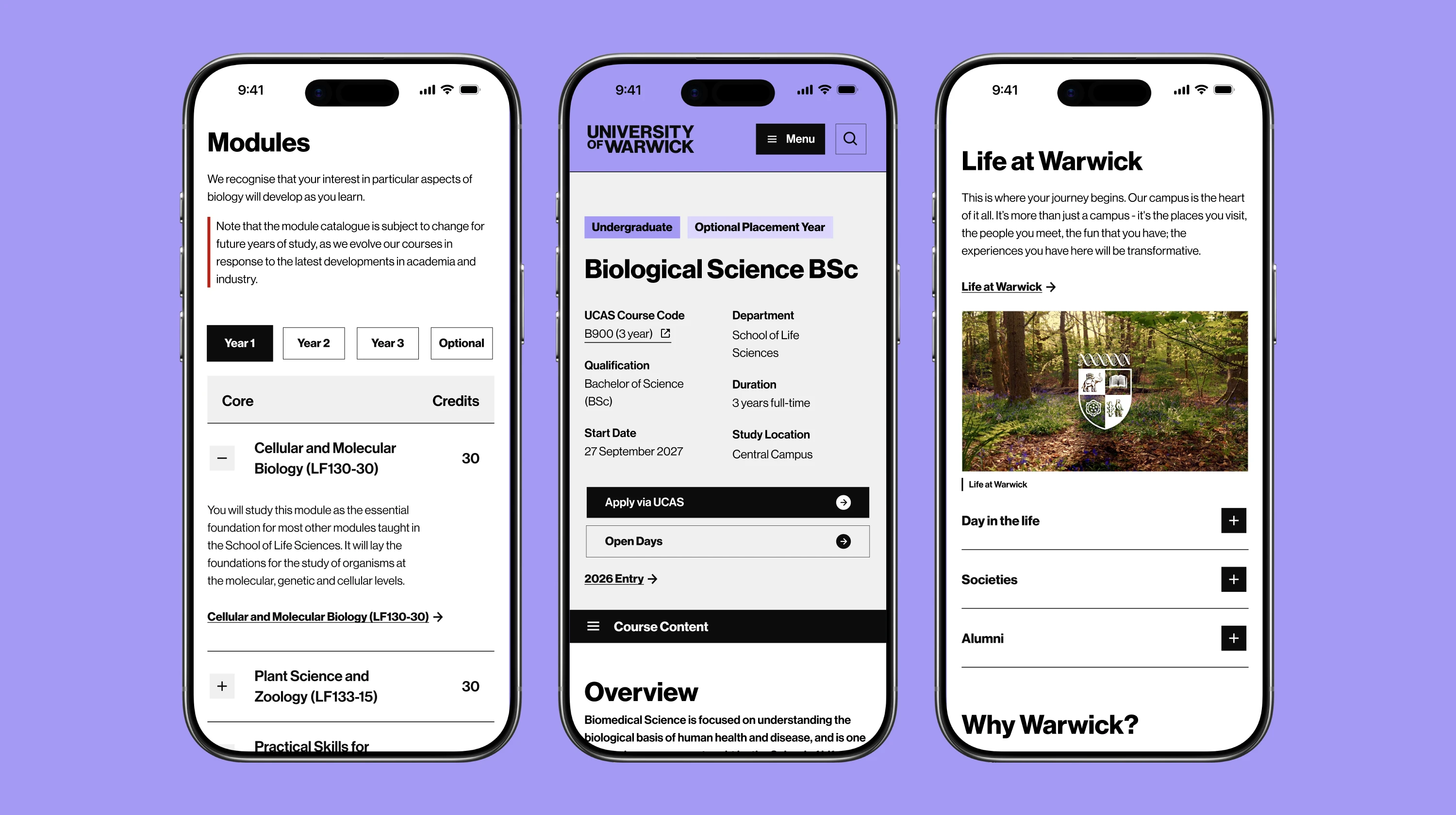
37% of users visit on mobile — the redesign is fully responsive from the ground up.
Underpinning the front-end changes, centralised CSS and JS provides a single maintainable source of styling aligned with the new brand system, laying the foundation for scalable rollout across the site platform ahead of the 2027 launch.
What's next?
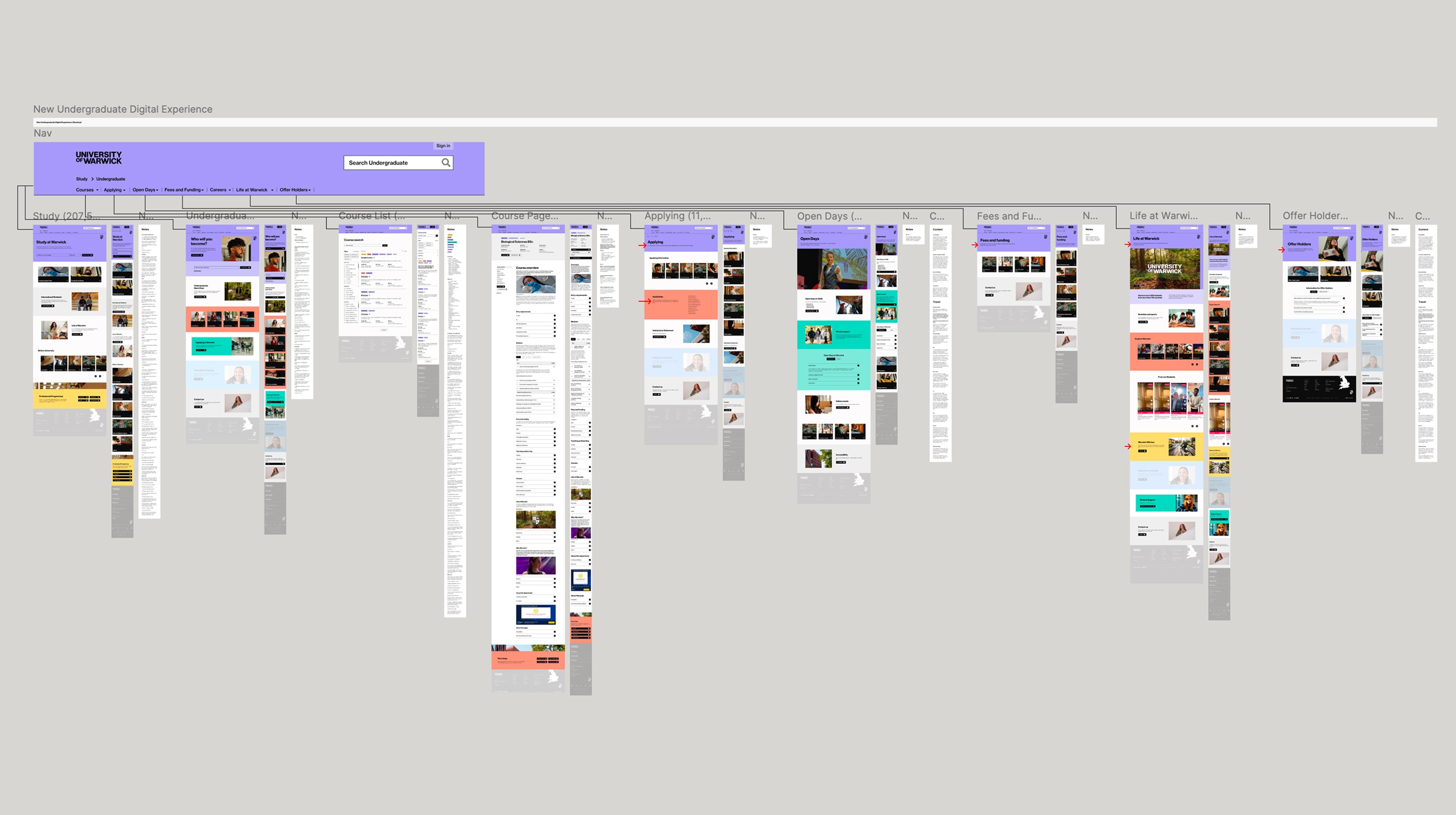
Though the course pages do most of the heavy lifting, the UG Digital Experience (UDX) is our team's main focus, with 10 site areas being updated, covering 90% of the UG user journey. These updates will ensure content is delivered to users as effectively as possible, bringing pages in line with the evolved brand and using components from the new design system. There will also be:
Live surveys running against both the old and new designs to track improvements in satisfaction and findability metrics
Planned future iterations of functionality, along with 3-month testing and expansion to PG and other non-standard courses
Collaboration and Feedback
For all of my projects, I create a Figma slide deck. This aids storytelling and stakeholder communication, while also supporting team collaboration, giving us a shared reference point of facts and direction alongside the Figma design files whenever we meet.
Kyle Palmer — UX/UI Design
Matt Fife — Data
Ed Dyer — Development
Suzie Edwards — Strategy
MCI Web Team — Content
“This is a significant achievement and represents months of sustained, thoughtful work. It is the biggest refresh of these pages in many years and a real milestone for the University”
“The scale and quality of what has been delivered is impressive”
Dr Chris Twine
University Secretary
"Kyle in the UX Team has delivered an outstanding job with the designs, with research and data from over 1.5k prospective students at open days and across website surveys"
"He’s brought such enthusiasm to the process, and his design choices have genuinely pushed the possibilities of the existing Sitebuilder platform to new heights"
Matthew Fife
UX Manager